In 1988, Stephen Hawking suggested that if we found a physical theory to explain the universe, then “we would know the mind of God”. What, if anything, he meant by this was never clear. Now, in association with Leonard Mlodinow of the California Institute of Technology, he has written a new book, entitled The Grand Design (Bantam). Yet it would seem there is no such design. God may be written out, but the more we know about the universe, the deeper the mystery of its creation. This should surprise nobody. It would not have surprised the Rev Conyers Middleton.
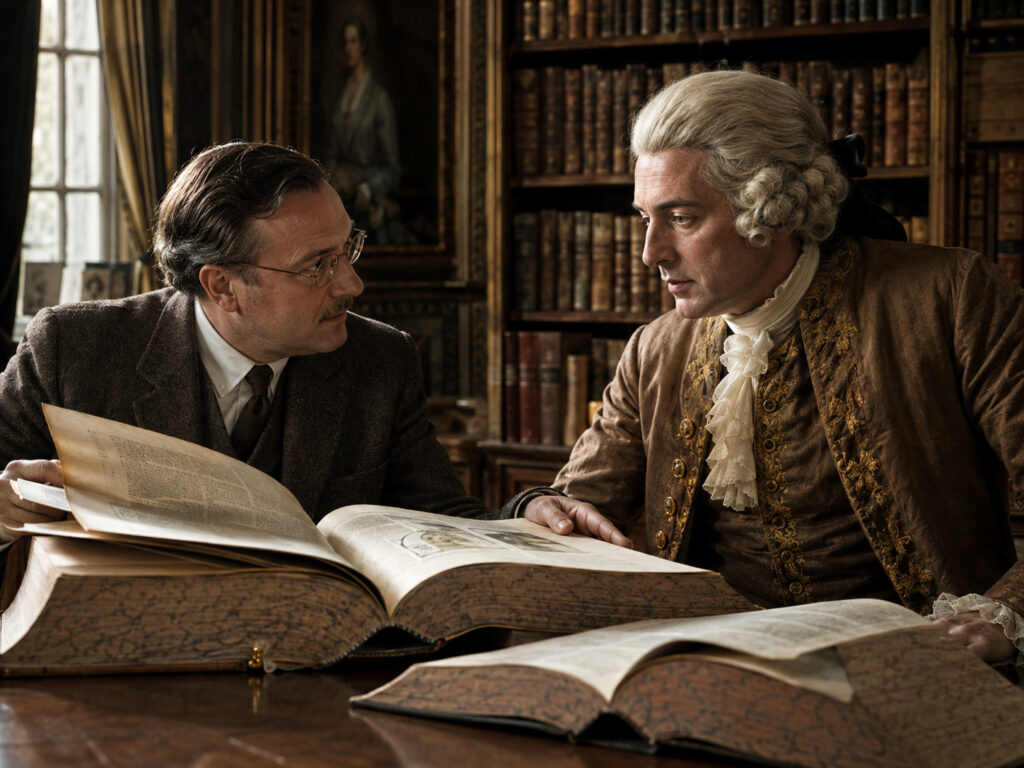
Middleton (1683-1750) was a Fellow of Trinity, Cambridge, and a Church of England clergyman described by Leslie Stephen as a “covert” enemy of Christianity and “one of the few divines who can fairly be accused of conscious insincerity”. Despite this interesting judgment, Middleton’s is not a well-known name. Indeed, he has been largely forgotten. This should now be corrected. In an essay, published for the first time in the collection History and the Enlightenment (Yale, £30), Hugh Trevor-Roper establishes his importance in the history of intellectual doubt, and demonstrates his influence on Gibbon and — two generations later — on Macaulay. A man who mattered so much to our two greatest historians deserves to be rescued from oblivion. His career was admittedly unsatisfying. Despite the patronage of Sir Robert Walpole, he never secured the preferment in the Church that he repeatedly sought. His opinions were regarded as subversive, even heretical.
Middleton’s hero was Cicero, whose attitude to religion, expressed in the work De Natura Deorum, was founded in reason. That was Middleton’s own position. Meanwhile, he discovered that, as Trevor-Roper puts it, “those ceremonies and forms of Catholic devotion which Protestants regarded as idolatrous were identical with, and copied from, and continuous with, those of pagan Rome.” This conclusion might be regarded as a stout defence of Protestantism and the position of the Church of England.
Middleton, however, was not content to stop there. He proceeded over the last 30 years of his life to assail the Christian citadel and undermine its defences. There were three stout bastions: the Word of God as revealed to Moses and recorded in the first five books of the Old Testament; the miracles wrought by Christ and the Fathers of the early Church, which proved that the Christian Church embodied the fulfilment of the Divine Plan for mankind; and the prophecies which prepared the way for the coming of Christ.
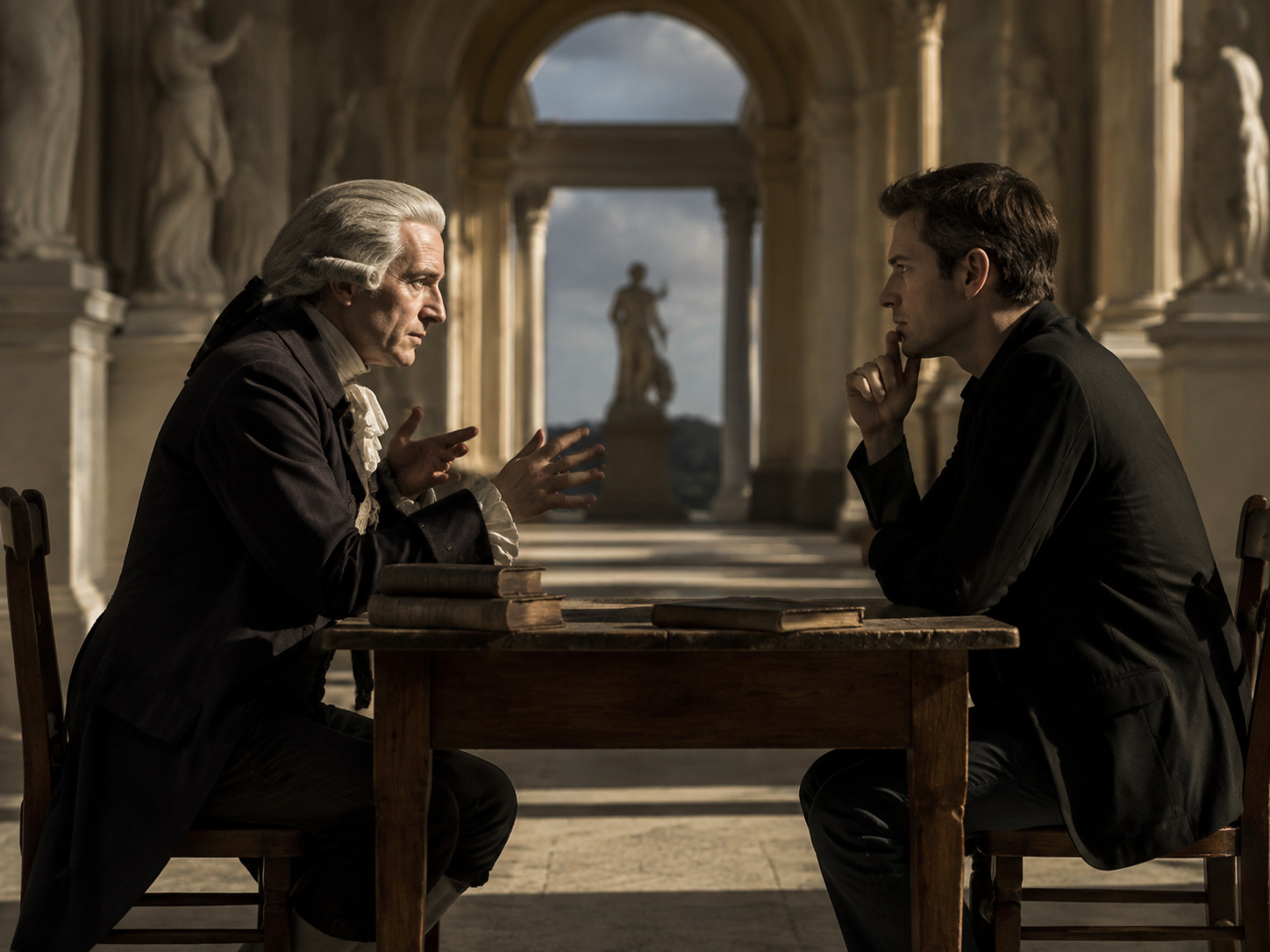
Moses, he decided, was a clever leader who had imposed himself on a “rude and illiterate tribe” and, to cement his position, had pretended that authority for the laws and customs he decreed had been granted him in dialogue with the Almighty. There was nothing, in Middleton’s opinion, reprehensible in this. The second king of Rome, Numa Pompilius, had in like manner drawn authority for the religion he had prescribed for his subjects from conversation with the nymph Egeria. But sensible men would no more believe in Moses and the Books of Genesis and Exodus than in Numa and Egeria.
Then Middleton turned to deal with the miracles (though he prudently refrained from touching on those ascribed to Jesus himself). What were the facts of the case? What did observation and experience teach us? Roman Catholics might still believe in nonsense such as liquefying blood and weeping statues of the Madonna, but sober Protestants all agreed that the age of miracles was past. Why was this? A difficult question to answer while still proclaiming belief in the historical validity of attested ones. Was it not more probable that these so-called miracles had been no more than the delusions of weak and silly men (for so he described the revered Fathers of the Church) or had been devised by unscrupulous ones to establish their own authority? The evidence was worthless for “no force of testimony can alter the nature of things”. It was not so long since a belief in witchcraft had been general, but “the belief in witches is now extinct and has been quietly buried”. Alleged miracles that fly in the face of the Laws of Nature are equally incredible absurdities.
As for the prophets, they too offered mere assertion. “The case is the same in theology as in natural enquiries; it is experience alone, and the observation of facts, which can illustrate the truth of principles.” There was no need of miracles and prophecies, when God has revealed himself “continually before our eyes, in the wonderful works and beautiful fabric of the visible world”. But no man of sense could suppose that doctrines such as the Incarnation, the Resurrection and the Trinity were “probable”.
In short, Middleton was a deist who saw nothing in Christianity superior to the religion of the wisest men of Antiquity. This did not, however, mean that he saw no value in religion and religious observance. On the contrary, what he called “natural religion” was to be honoured “as a rule of life and manners”, and was “best calculated for the benefit of society and the support of government”.
It is here that Middleton the deist parts company from modern atheists. “He was not,” Trevor-Roper writes, “a religious man. He had no sense of awe or devotion, except in the presence of Nature, of ‘the wonderful fabric of the world’. He had no feeling of sin, no need for redemption, no tragic sense of the world. But he recognised that deism was not enough. It might satisfy ‘the wiser sort’, but it could not, by itself, provide a means of social control.” And such control was necessary.
Gibbon, as Middleton’s disciple, would take up the same position. “The various modes of worship which prevailed in the Roman world were all considered by the people as equally true, by the philosopher as equally false, and by the magistrate as equally useful.”
True in the eyes of the credulous, false in the opinion of the wise, useful to government. This was not quite a dismissal of religion, but it was at best a tepid endorsement. There might be a Prime Mover, God the Creator, and the beauty and order of the natural world suggested that there was such a being. But sensible men could no more credit the doctrines of the Christian Church than the philosophers of Greece and Rome could give credence to the stories of the Olympian gods. Invocation of the saints was no more likely to bring desired results than the sacrifice of cattle on pagan altars and the reading of their entrails. This was the conclusion that made deists of Middleton and Hume, Voltaire and Gibbon, and Robert Burns.
It was not, however, necessary to discard religion or overthrow churches. Indeed, it was desirable not to do so. The ethical teaching of Christ was admirable and the improbability of the Resurrection did not make it less so. Religion had a social value. Without religion, what was to prevent men from regressing to the Hobbesian state of nature where life was “nasty , brutish and short”? A century later, Dostoevsky would declare that, if there was no God, then anything was permitted.
This was the frightening and bottomless pit that yawned before 18th-century deists. The props of the Christian religion might have rotted. The churches might preach doctrines that no sensible man could credit. No reasonable person could believe, as Gibbon put it, that in the youth of the Christian religion, “the lame walked, the blind saw, the sick were healed, the dead were raised, demons were expelled, and the laws of Nature were frequently suspended for the benefit of the Church”. And yet…and yet. What was to be put in place of revealed religion? There was no easy or satisfactory answer. Therefore, scepticism must be expressed with restraint and the teaching, if not the mysteries, of the Church must be accorded respect. For the 18th century was not only a rational age, it was also an aristocratic one with a fear of the social consequences of free-thinking and of the unbridled passions of the mob.
The French Revolution showed these fears to be well-founded. Voltaire and the other philosophes — men of the Enlightenment, deists, enemies of the Church, if not of natural religion — had undermined the authority of the clergy, and the floodgates were opened. There was an understandable retreat from advanced opinion. Burke wrote: “We are afraid to put men to live and trade each on his own private stock of reason; because we suspect that this stock in each man is small, and that the individuals would do better to avail themselves of the general bank and capital of nations, and of ages.” Middleton, had he lived to contemplate the Revolution, would surely have agreed with Burke. Had not Cicero spoken with like reverence of the inherited wisdom of the Roman Republic and been punctilious in the observance of religious rituals that honoured the gods in whom he did not believe? Soon, however, religion was back in fashion: in France, Chateaubriand rather than Voltaire; in England, Newman and the Oxford Movement instead of the cool scepticism of Middleton and Gibbon. In 1843, Trevor-Roper writes, “When Newman and his Oxford friends were putting the clock back, and reviving, with infantile credulity, the miracles of the third and fourth centuries, Macaulay could exclaim, ‘the times require a Middleton’.” Instead they got Darwin and The Origin of Species.
Darwin destroyed whatever remained of the authority of the Book of Genesis, and today’s atheists are Darwin’s heirs. The Churches no longer play the part that Middleton assigned to them, for, in a democratic age, when each individual picks his creed and ethical standpoint for himself, they can no longer provide “a means of social control”. Yet something must do that, and so the authority of the State has assumed the role that used to be reserved to religion. The State, a human construction, presides complacently over a world where God is deemed to have died. Yet men must believe in something. Middleton’s view remains valid, and the State itself does not satisfy. So we have made for ourselves two objects of reverence, both inherited from the Enlightenment.
The first is the doctrine of human rights. The precise delineation of these may vary. Their origin is as obscure as any of the mysteries of religion. They have manifestly been ignored or trampled on for most of the course of history. Burke viewed claims to such rights with a degree of scepticism but now these rights, however arbitrarily determined, have been enshrined in a Convention to which all EU states subscribe. This convention plays the part that Middleton granted to religion, prescribing a code of conduct and imposing on us a duty to observe it. Much that it ordains flies in the face of traditional Christian morality, especially in sexual matters. Yet the Christian Churches have adapted to it and speak its languages. Even the proud Church of Rome preaches the toleration that it once anathematised.
The second heir of the Enlightenment is Science. Nature had, for Middleton and other deists, offered the satisfaction of the Sublime, but, as Alain de Botton has observed, “the dominant catalyst” for our feeling of the Sublime is no longer Nature, which we have subdued and despoiled, but Science. We are “deep in the era of the technological sublime”.
Yet if on the one hand, we are now, as he remarks, “almost exclusively amazed by ourselves”, on the other hand, Science may also disturb our complacency and belittle our achievement. Genetic science tends towards determinism as surely as Calvinist theology once did. The science of the brain suggests that we are creatures driven by chemical impulses. Free will may be no more than a comfortable illusion. God, if not dead, has been banished, and “natural religion” discredited.
Not all scientists are atheists, but the progress of Science since Middleton’s day has dismantled the certainties of centuries. Scientists may speak of “the grand design” but cannot tell us what it is. Moreover, Science itself offers no sure foothold, for we know that the scientific dogmas of the past have long since been discredited. It is probable therefore that the “scientific truths” of today will be superseded and relegated to the status of agreeable or convenient myths. An 18th-century deist such as Middleton could be more secure in his scepticism than the most assertive atheist in his faith today. “The times require a Middleton,” wrote Macaulay, viewing the Oxford Movement with dismay. But the march of Science makes it impossible for us to recover his serene assurance.